Youth Empowerment Forum
From Maria Almonte-Weston:
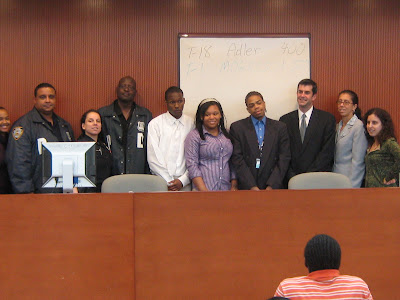
“I want to be the voice of my community”.
This was the main reason why Michael Patterson, a senior in John F. Kennedy High School decided to intern at Bronx Community Solutions’ Youth Empowerment Forum, a program created to address youth and police interactions related to low-level offenses in the Bronx. He, along with two other young adults, participated as youth leaders at our Bronx Week event held on June 12, 2009.
During their internship, which was led by Bronx Community Solutions staff Monica Garcia and T.K. Singleton, the participants conducted several roundtable focus groups with youth and criminal justice personnel. According to Michael, “the hardest part was coming up with the right questions to ask. Being impartial was hard!”
All of the youth leaders spoke about how this experience changed their perspective: “Even though my views have not changed about the criminal justice system, my perception of what happens has,” said Mitchell Hicks, another youth leader who also wants to be a defense attorney and work in the Bronx some day.
At the event, participants shared their research findings and presented a few recommendations to a panel of criminal justice experts (Seann Riley, Bronx Defenders Deputy Director; Odalys Alonso, Executive Chief Assistant District Attorney; and Detective Warren, the NYPD 40th Precinct’s youth officer), an audience of their peers, teachers and other court personal.
Paige Grant, a senior at John F. Kennedy, moderated the panel discussion; she decided to join the Youth Empowerment Forum because she wanted to gain experience in policy. She shared that her experience with the police was both good and bad. “I have very strong feelings towards officers and the way they deal with youth, but when I led the round table discussion with the criminal justice representatives I got such a better understanding of each players role in the system that serves my community. I also felt like my voice and point of views was heard and I hope that they could apply it when they interact with youth in the Bronx.
In the community interviews conducted by our interns we found that residents wanted to voice their concerns about four major issues: Police harassment or abuse of power, youth starting trouble, the need for more constructive activities for youth, and problems with conditions in their community.
People felt that when policing, officers would abuse their authority, for example abusive language or abusive actions (like putting the hand cuffs too tight). Another complaint was not taking the time out to explain arrests. Many people claimed they did not even know why they were being arrested until they were in court. Some interviewees also felt that some officers did not follow proper procedures when making an arrest for charges of trespass (Operations Clean Halls).
Many people felt that young people who live in the community where disrespectful (to the police and elderly), hang out around the outside of buildings and hallways, and do not listen to adults. Many of the members of the community felt that if young people had a place to hang-out the youth would not be targets of arrest. Many Community members had major issues with the quality of life crimes and concerns, including graffiti, trash, smoking everywhere, and too many people just hanging out.
The participants in the Youth Empowerment Forum had three recommendations:
1. Developing/funding after-school programs for youth that vary from sports and arts to counseling programs (to name a few)
2. Educating youth on trespass legislation, their rights and responsibilities as residents and community members (for example, creating public announcements and or short films, passing out paraphernalia on top ten do’s and don’ts when in dealing with the police)
3. Enhancing relationships/dialog between youth and police, creating more roundtable events and/ or town hall events with community officers to increase positive communication and better treatment.
[For a detailed report from the New York Lawyers for the Public Interest on policing in New York City public housing, vertical patrols, trespass enforcement, and Fourth Amendment rights of residents of public housing go here. The event was held in the magnificent Jury Assembly room in the new Hall of Justice. For previous discussion on this blog about the new courthouse, go here, and for an insider's view of a day in the life of a Bronx jury, go here. -Ben]

“I want to be the voice of my community”.
This was the main reason why Michael Patterson, a senior in John F. Kennedy High School decided to intern at Bronx Community Solutions’ Youth Empowerment Forum, a program created to address youth and police interactions related to low-level offenses in the Bronx. He, along with two other young adults, participated as youth leaders at our Bronx Week event held on June 12, 2009.
During their internship, which was led by Bronx Community Solutions staff Monica Garcia and T.K. Singleton, the participants conducted several roundtable focus groups with youth and criminal justice personnel. According to Michael, “the hardest part was coming up with the right questions to ask. Being impartial was hard!”
All of the youth leaders spoke about how this experience changed their perspective: “Even though my views have not changed about the criminal justice system, my perception of what happens has,” said Mitchell Hicks, another youth leader who also wants to be a defense attorney and work in the Bronx some day.
At the event, participants shared their research findings and presented a few recommendations to a panel of criminal justice experts (Seann Riley, Bronx Defenders Deputy Director; Odalys Alonso, Executive Chief Assistant District Attorney; and Detective Warren, the NYPD 40th Precinct’s youth officer), an audience of their peers, teachers and other court personal.
Paige Grant, a senior at John F. Kennedy, moderated the panel discussion; she decided to join the Youth Empowerment Forum because she wanted to gain experience in policy. She shared that her experience with the police was both good and bad. “I have very strong feelings towards officers and the way they deal with youth, but when I led the round table discussion with the criminal justice representatives I got such a better understanding of each players role in the system that serves my community. I also felt like my voice and point of views was heard and I hope that they could apply it when they interact with youth in the Bronx.
In the community interviews conducted by our interns we found that residents wanted to voice their concerns about four major issues: Police harassment or abuse of power, youth starting trouble, the need for more constructive activities for youth, and problems with conditions in their community.
People felt that when policing, officers would abuse their authority, for example abusive language or abusive actions (like putting the hand cuffs too tight). Another complaint was not taking the time out to explain arrests. Many people claimed they did not even know why they were being arrested until they were in court. Some interviewees also felt that some officers did not follow proper procedures when making an arrest for charges of trespass (Operations Clean Halls).
Many people felt that young people who live in the community where disrespectful (to the police and elderly), hang out around the outside of buildings and hallways, and do not listen to adults. Many of the members of the community felt that if young people had a place to hang-out the youth would not be targets of arrest. Many Community members had major issues with the quality of life crimes and concerns, including graffiti, trash, smoking everywhere, and too many people just hanging out.
The participants in the Youth Empowerment Forum had three recommendations:
1. Developing/funding after-school programs for youth that vary from sports and arts to counseling programs (to name a few)
2. Educating youth on trespass legislation, their rights and responsibilities as residents and community members (for example, creating public announcements and or short films, passing out paraphernalia on top ten do’s and don’ts when in dealing with the police)
3. Enhancing relationships/dialog between youth and police, creating more roundtable events and/ or town hall events with community officers to increase positive communication and better treatment.
[For a detailed report from the New York Lawyers for the Public Interest on policing in New York City public housing, vertical patrols, trespass enforcement, and Fourth Amendment rights of residents of public housing go here. The event was held in the magnificent Jury Assembly room in the new Hall of Justice. For previous discussion on this blog about the new courthouse, go here, and for an insider's view of a day in the life of a Bronx jury, go here. -Ben]
Comments
[url=http://www.omc-movie.com/?p=6053]How to Train Your Dragon movie[/url]
free movies
watch free movies
[url=http://www.omc-movie.com/?cat=18991]News movies[/url]
[url=http://www.bookstofilm.com/category/movies/genres/drama/]Drama downloads[/url]
online movies
watch dvd movies for free [url=http://www.bookstofilm.com/category/movies/genres/western/]Western downloads[/url]